Storing Food and Supplements in Your Gym Bag (Without Regretting It)
Quick Answer: The genuine risks are a shaker with wet protein residue left more than a few hours, any dairy or meat item left in a warm bag, and cross-contamination from a wet, sweaty compartment onto food. Pre-mixed protein in a shaker at room temperature is the item to be most careful about. Dry powders, sealed bars and whole fruit are low risk and can live in the bag.
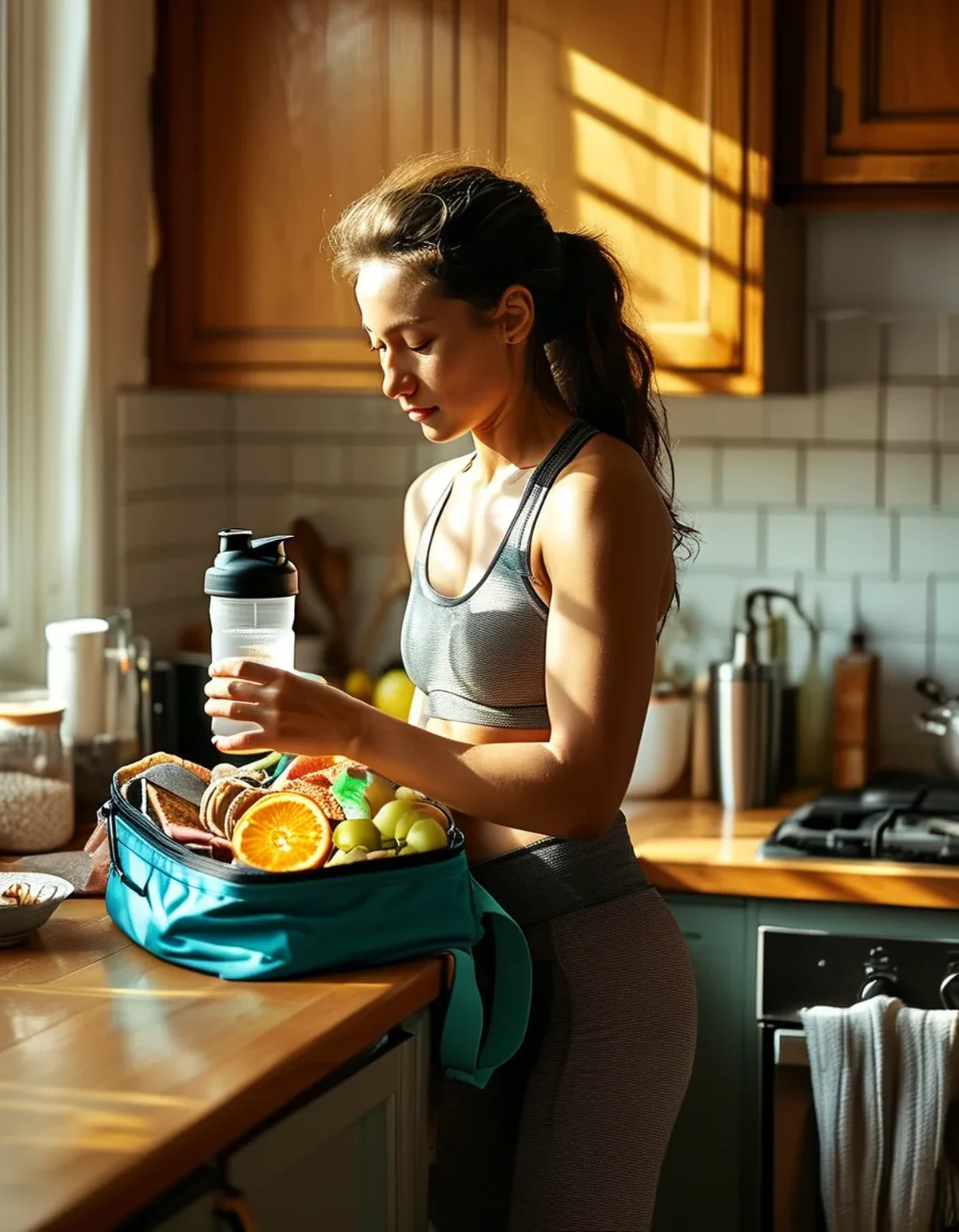
One sealed pouch for food and one habit — the shaker gets rinsed immediately — solves nearly all of it.
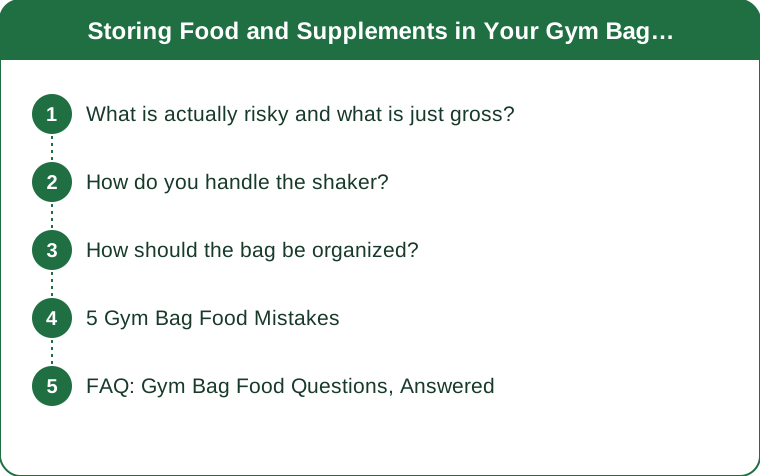
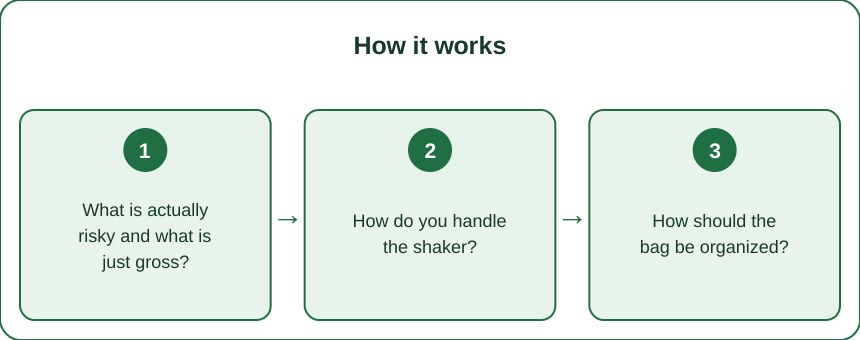
What is actually risky and what is just gross?
There is a real line here, and it is worth knowing which side an item is on.
Genuinely risky:
- Pre-mixed protein shakes left at room temperature. Milk or water plus protein is a good bacterial growth medium, and a warm bag is a good incubator. A mixed shake should be consumed within about two hours at room temperature, or kept cold. This is the single item most worth being strict about.
- Any dairy, meat, egg or cooked food left in a warm bag. The standard food safety guidance is a two-hour limit at room temperature, dropping to one hour above about 32 degrees Celsius. A gym bag in a car in summer is well past that.
- A shaker with residue left sealed for days. This is the classic. Wet protein residue in a sealed container grows mold and bacteria quickly, and the smell is the least of it.
Just unpleasant:
- Dry protein powder that has clumped from humidity — texture is affected, safety generally is not
- A squashed banana
- A bar that melted and re-set
Low risk, fine to store:
- Sealed bars, dry powders in sealed containers, nuts, whole citrus, sealed electrolyte tablets
How do you handle the shaker?
One habit removes almost the entire problem.
Rinse immediately after use, every time. Not when you get home. Not later. A 15-second rinse at the gym water fountain or bathroom sink prevents essentially everything that goes wrong with shakers. Residue that has not dried is trivially easy to rinse away; residue that has dried and sat is not.
Never seal a wet shaker. If you cannot wash it properly, rinse it and transport it with the lid off or loosely placed. A sealed wet container is the specific condition that grows things.
Wash properly at home the same day. Disassemble everything — lid, gasket, spout cover, mixing ball. The gasket is where the worst buildup hides and it is the part almost everyone leaves in place.
Replace the bottle periodically. Plastic scratches, and scratches hold residue that washing does not reach. A shaker with a cloudy, scratched interior is past its useful life.
If one has gone bad: soak with a solution of warm water and either baking soda or a denture-cleaning tablet overnight, then wash. If a smell survives that, replace it — the smell is coming from somewhere you cannot clean.
How should the bag be organized?
Separation is the whole strategy: food should never share a compartment with anything wet.
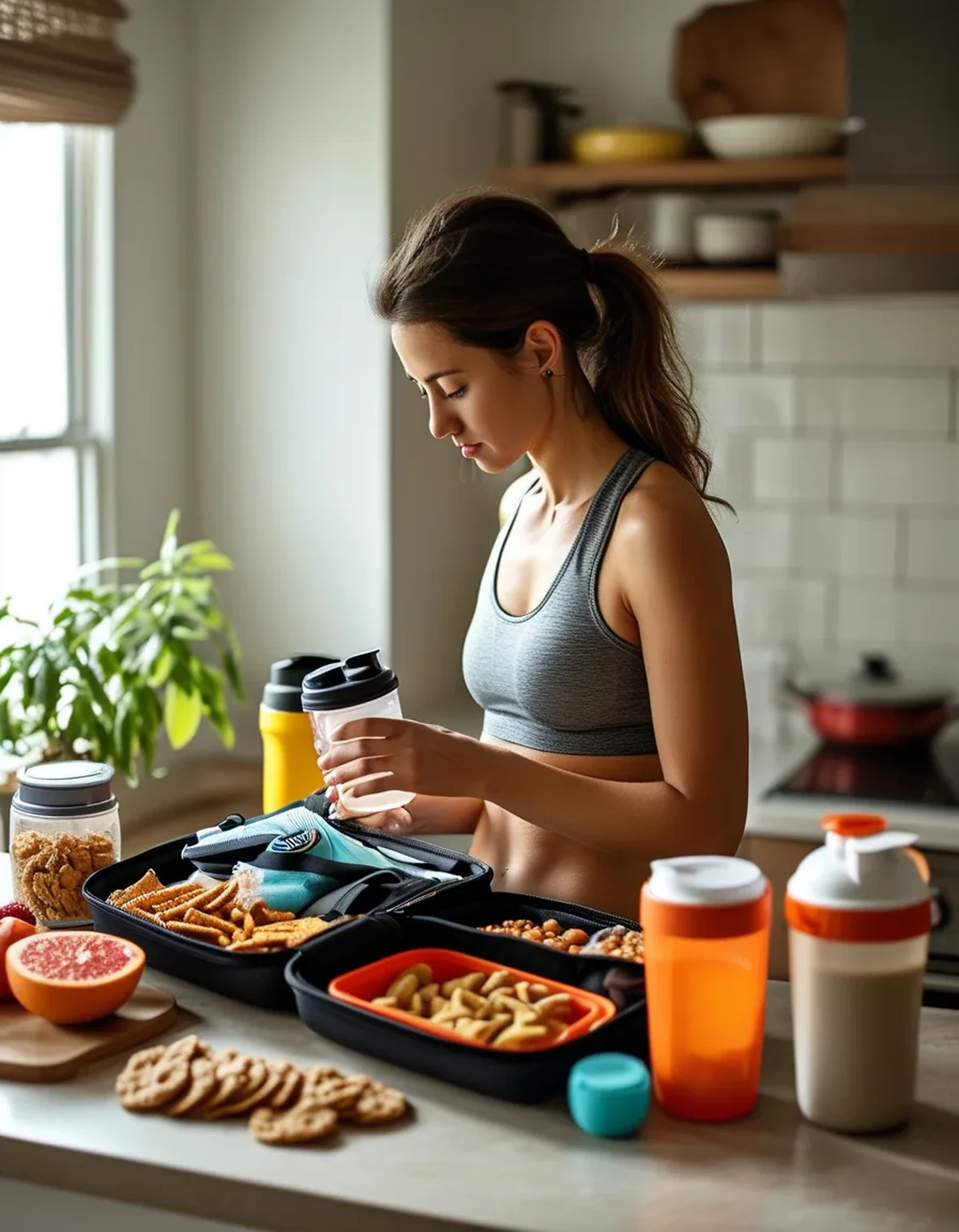
Food goes in a sealed pouch. A zip pouch or a small hard container, kept in a dry compartment. This does two jobs — it protects food from the wet side of the bag, and it stops crumbs and wrappers from migrating into the rest of the bag.
Wet items get their own compartment or bag. Sweaty clothes, a damp towel, wet swimwear. A ventilated compartment if your bag has one, a separate waterproof pouch if it does not. A wet towel sitting against a food pouch for six hours is how you get both a mildew problem and a food safety problem in one.
Supplements: a small pill case or single-serve sachets. Pre-portioned powder in a sealed container beats carrying a full tub, which is heavy, prone to bursting and takes up half the bag.
Keep a permanent kit and a daily pack. Permanent items — a sealed emergency bar, electrolyte tablets, a spare hair tie — live in the bag. Perishable items get packed fresh each day and taken out each evening. Mixing these two categories is how you end up with a mystery item from three weeks ago.
An insulated pouch changes what is possible. If you routinely carry dairy, yogurt or prepared meals, a small insulated pouch with an ice pack takes those items from risky to fine, and they cost very little.
5 Gym Bag Food Mistakes
1. Leaving the bag in a hot car. A car interior can reach well above ambient temperature in direct sun, and the two-hour food safety window shortens dramatically at those temperatures. It also melts bars, degrades some supplements and cooks whatever is in the shaker. This is the single worst thing you can do to a gym bag.
2. Storing pre-mixed protein for the drive home. Mixing in advance and leaving the shaker in the bag through a workout means it has been at room temperature for well over an hour before you drink it. Carry the powder dry and add water at the gym — it takes 20 seconds.
3. Keeping open packets. A half-eaten bag of nuts folded over and stuffed in a pocket attracts moisture and, over time, pests. Reseal properly or transfer to a container.
4. Trusting the sniff test on dairy. Bacterial growth that causes illness does not necessarily produce an off smell. Yogurt that has been warm for four hours can smell completely normal. Time and temperature are the criteria, not smell.
5. Ignoring the bag itself. Even with perfect food discipline, a bag that never gets emptied and aired accumulates residue and moisture in the seams. Empty it completely once a week, leave it open to dry, and wash it according to its care label every month or so.
FAQ: Gym Bag Food Questions, Answered
Is it safe to keep protein powder in the bag long term?
Dry powder in a properly sealed container is fine for weeks. The enemy is humidity — a bag that regularly holds damp towels will introduce moisture, and clumped powder means moisture got in. Keep it sealed and keep it away from the wet compartment.
How long can a protein bar stay in there?
Until its expiry date, essentially, provided it stays sealed and does not repeatedly melt and re-solidify. Bars are shelf-stable by design. Check the date on your emergency bar every couple of months, because that is exactly the one everybody forgets.
What about creatine or pre-workout already mixed in a bottle?
Creatine degrades slowly in solution, so mixing well in advance reduces the amount you actually get. Pre-workout is generally fine but tastes worse. Both are better carried dry and mixed on the spot.
Is fruit okay in a gym bag?
Whole citrus and apples are robust. Bananas and berries are not — they bruise, leak and attract everything. If you want soft fruit, it goes in a hard container.
TL;DR:
- Pre-mixed shakes and any dairy or cooked food are the genuine risks; two hours at room temperature is the limit.
- Rinse the shaker immediately every time and never seal it wet — this one habit prevents most problems.
- Keep food in a sealed pouch in a dry compartment, and wet items separated entirely.
- Carry powder dry and mix at the gym rather than pre-mixing at home.
- Never leave the bag in a hot car, and empty and air the whole bag weekly.
Dry powders, sealed bars and firm fruit can live in the bag indefinitely. Everything wet is a same-day item.
See It in Motion
Seen here: High Waist Yoga Leggings with Side Pockets — shop it on bubblelime.com
Keep Reading
This article is for general informational and styling purposes only. Fit, sizing, and product availability may vary.