How to Pack for a Class You Have Never Tried Before
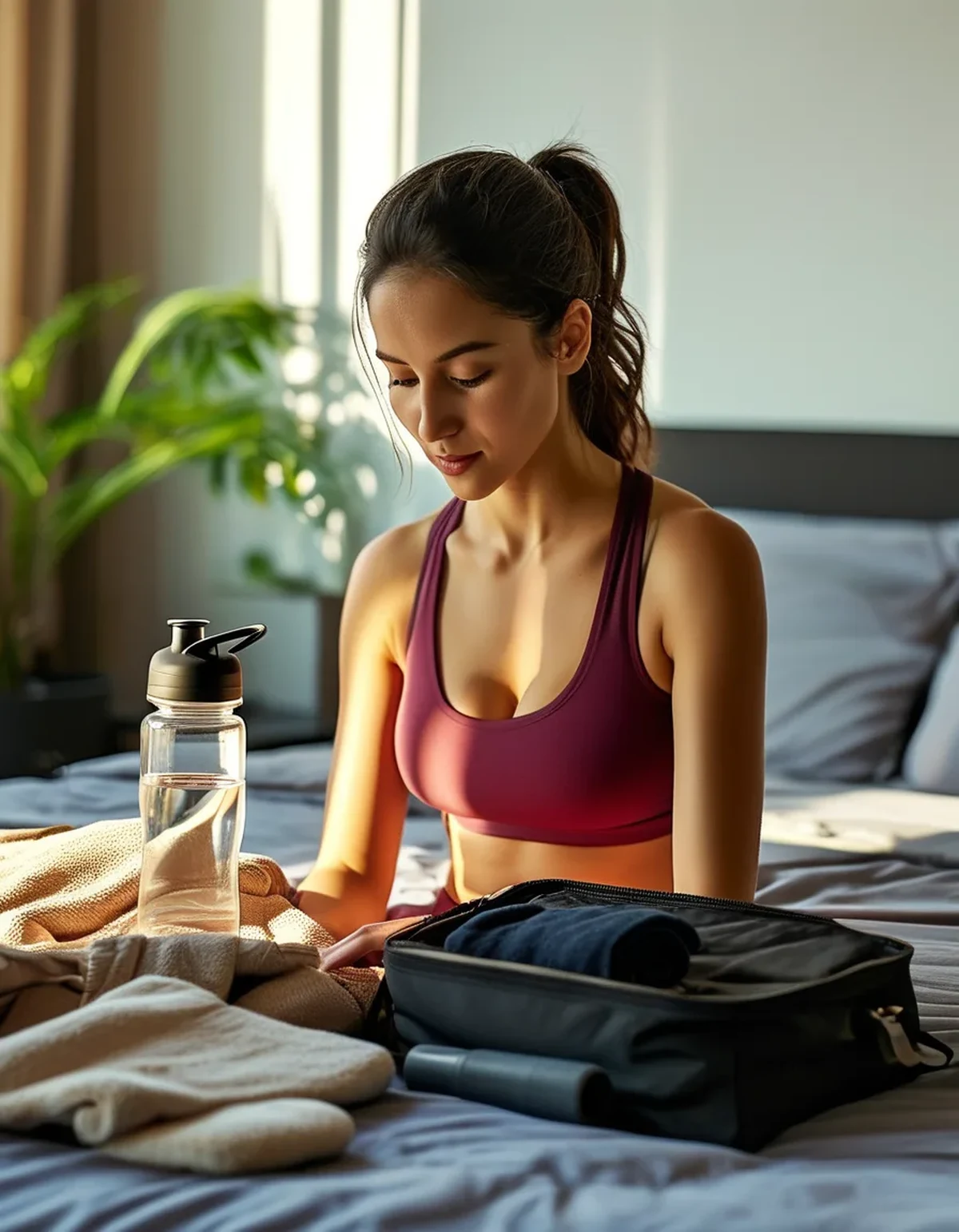
Quick Answer: Pack for the three unknowns: what is on your feet, how much you will sweat, and whether the studio provides anything. That translates to a core kit you never unpack - water bottle, small towel, hair ties, deodorant - plus three footwear options in one small bag: grip socks, plain socks, and trainers. That single addition covers reformer, barre, yoga, spin, HIIT, and anything else you are likely to walk into. Then check two things on the studio’s website before you leave: whether they provide mats and equipment, and whether there are showers.
The genuine risk with a new class is not being underprepared - it is arriving with the wrong shoes and spending the hour distracted by it.
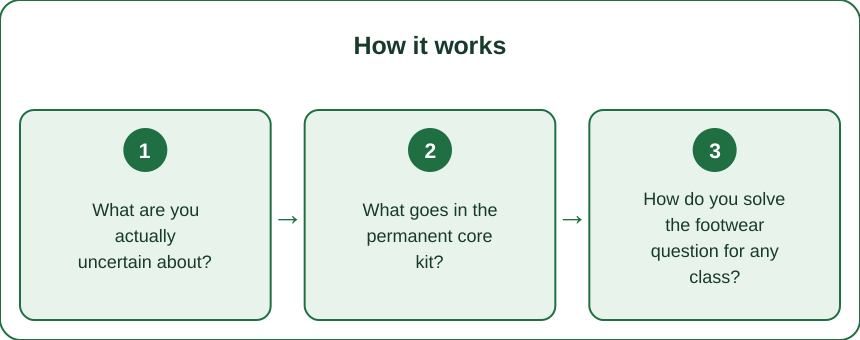
What are you actually uncertain about?
Three things, and they map neatly onto what to pack.
Footwear. The largest variable and the one that causes the most trouble. Reformer pilates and barre usually require grip socks. Yoga is barefoot. Spin needs either cleats or trainers. HIIT and strength need proper trainers. Arriving with only trainers for a reformer class means either buying the studio’s socks at a markup or being turned away.
Sweat volume. You do not know if this is a 40-minute hot class or a gentle mobility session. The difference is whether you need a full change of clothes and a shower kit, which is most of the weight in a bag.
What the studio provides. Mats, towels, weights, water. Boutique studios usually provide more; big-box gyms usually provide less. This is the one thing you can simply look up.
A fourth, quieter one: how formal the space is. Some studios have proper changing rooms and lockers; some have a hook and a shelf. If in doubt, bring less and bring it in something you are happy leaving on a bench.
The whole packing strategy follows from this: cover the footwear question completely, make a reasonable guess at sweat, and check the provision question in two minutes online.
What goes in the permanent core kit?
The things that stay in the bag regardless, restocked rather than repacked.
Water bottle. Filled before you leave. Studio taps are not always accessible mid-class and buying water is a needless expense.
A small towel. Even if you are not showering, a hand towel for the face and for wiping down equipment. Many studios require you to wipe down after use and provide only a spray.
Hair ties and clips, more than one. The single most common forgotten item, and the most annoying.
Deodorant. Travel size.
A plastic or waterproof bag for wet things. The thing that separates a functional gym bag from a smelly one. Damp clothes sealed in a bag for a day is how gym bag odour actually starts.
Basic plasters and a hair band or headband. Small, weightless, occasionally session-saving - a blister on a new movement pattern is common.
Grip socks and plain socks. Which brings us to the footwear question properly.
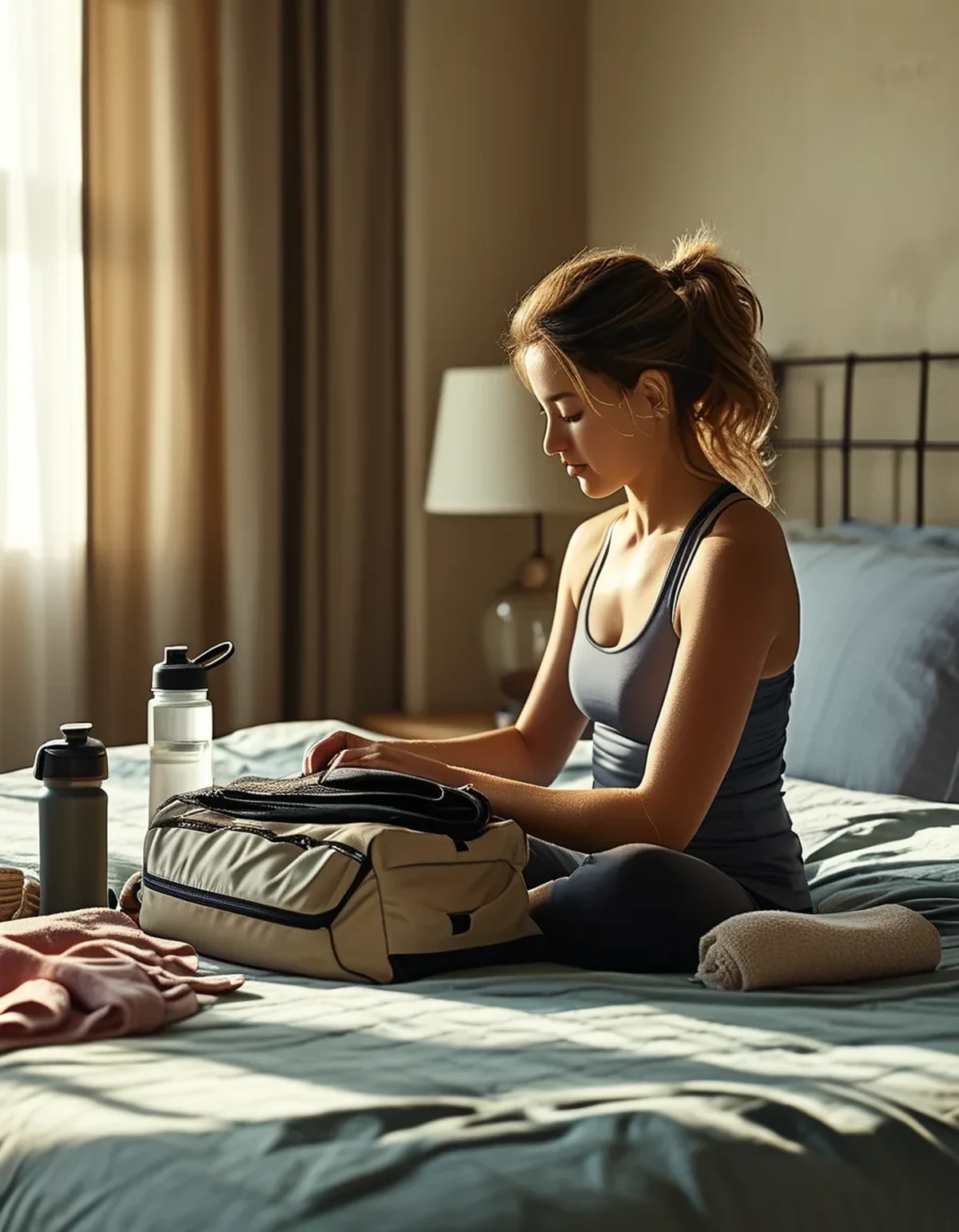
Keep this core kit assembled permanently and restock it on Sunday. The moment you unpack a gym bag completely, you start forgetting things.
How do you solve the footwear question for any class?
One small pouch, three options, and you never think about it again.
Grip socks. For reformer pilates, barre, and most studio mat classes. Increasingly required rather than recommended - many studios will not let you on a reformer without them, for hygiene and safety reasons. This is the item most likely to be the difference between doing the class and not.
Plain socks. For yoga if you prefer not to be barefoot, for changing rooms, and as a backup.
Clean trainers. For spin, HIIT, strength, dance, and anything on a gym floor. Studio floors often require indoor-only shoes, so a pair that has not been worn outside is worth having if you are going regularly.
What about cleats for spin? Almost every studio rents or provides them, and a first-timer should not buy them. Check the booking page - it will say.
A note on grip socks specifically: they are not interchangeable. Full-sole grip for reformer, toe socks if you want toe spread for yoga, and a light grip for barre. For a first class, any full-sole grip sock is fine.
Keep all three in one small drawstring bag inside your main bag. It takes almost no space and it removes the entire category of problem.
5 Things People Forget for a First Class
1. Arriving early enough. Not a packing item but the most common one. New studios expect you fifteen minutes early for a form, a tour, and a setup explanation. Arriving five minutes before means missing the part where they show you how the equipment works.
2. A hair tie that actually holds. Inverted positions, fast movement, and lying on your back all defeat a loose ponytail. Bring the one you trust, plus a spare.
3. Something to wear over the top afterwards. New class, unknown sweat level, and a walk home that is getting colder every week. A layer for afterwards is the item most often regretted in autumn.
4. A phone charger or a plan for your phone. Some studios lock phones away; some have no signal. Tell someone where you are if you are going somewhere new alone, and do not rely on your phone for the return journey.
5. A form of ID or the booking confirmation. Trial class offers frequently need the confirmation email, and some studios ask for ID on a first visit. A screenshot beats relying on signal in a basement studio.
And the honourable mention: not eating. Turning up to an unknown-intensity class having not eaten for six hours is how people feel faint in a warm room. Something small an hour or two before.
What changes as the weather turns?
The bag gets heavier, and the reasons are specific.
You need the after-layer, properly. Walking out of a warm studio into a cold evening with damp hair and damp clothes is the autumn version of the problem. A warm layer and something for your head is not optional once it drops below about 12C.
Wet weather means wet kit. Everything about gym bag hygiene gets harder in autumn - damp clothes dry slower, bags stay wet, and shoes brought in from the rain sit in a closed compartment. The waterproof bag for wet things becomes essential rather than useful.
Shoes need to come out of the bag between sessions. They dry, and the bag does not develop the smell that then takes a full wash to remove.
Studios get busier and lockers run out. From September, arriving to find no locker is common, which is an argument for a smaller bag you are happy to leave on a bench or under a chair.
Class booking gets competitive. Autumn is when boutique studios fill up. Book earlier than you would in summer, particularly for evening classes.
And your hands and lips will be drier. A small hand cream and a lip balm in the core kit are worth adding from now until spring.
FAQ: Packing for a New Class, Answered
How do I find out what to bring?
The studio’s website usually has a first visit or what to expect page. If not, email or message them - every studio answers this question constantly and nobody thinks it is a silly question.
What if I turn up with the wrong shoes?
Most studios sell grip socks at reception, and most will lend or rent what you need. Ask rather than skipping the class - they would far rather sort it out than lose you.
Should I buy equipment before my first class?
No. Studios provide mats, weights, and bands for beginners almost universally. Grip socks are the only thing worth owning in advance, and they are inexpensive.
How big should the bag be?
Smaller than you think. A bag that fits under a chair or in a small locker is more useful than one that holds everything, and it forces sensible packing.
What about valuables?
Bring as little as possible and assume there may be no locker. Many studios have open shelving rather than secure storage.
Do I need to shower there?
Check in advance - some boutique studios have no showers at all. If there are none and you are going somewhere afterwards, plan around it rather than discovering it after class.
TL;DR:
- Pack for three unknowns: footwear, sweat volume, and what the studio provides.
- Grip socks, plain socks, and clean trainers in one small pouch covers every class you are likely to try.
- Keep a permanent core kit - water, small towel, hair ties, deodorant, waterproof bag - and restock rather than repack.
- Check two things online: whether mats and equipment are provided, and whether there are showers.
- Arrive fifteen minutes early at a new studio. It is the most common mistake and it is free to fix.
- Autumn adds a warm after-layer, wet kit management, and busier lockers - go smaller, not bigger.
The fear about trying a new class is almost never about the exercise. It is about not knowing the rules of the room, and a bag that covers every option removes most of that in advance.
See It in Motion
Seen here: Crewneck Short Sleeve Workout T-Shirt — shop it on bubblelime.com
Keep Reading
This article is for general informational and styling purposes only. Fit, sizing, and product availability may vary.